Seguii il cartello dorato che indicava i bagni. Il corridoio profumava di detergente agrumato e profumi costosi. Entrai nel bagno delle donne, tutto bianco lucido e cromature scintillanti, mi chiusi per un attimo nell’ultima cabina e poi uscii di nuovo per affrontare lo specchio.
Per lunghi secondi rimasi semplicemente a fissarmi.
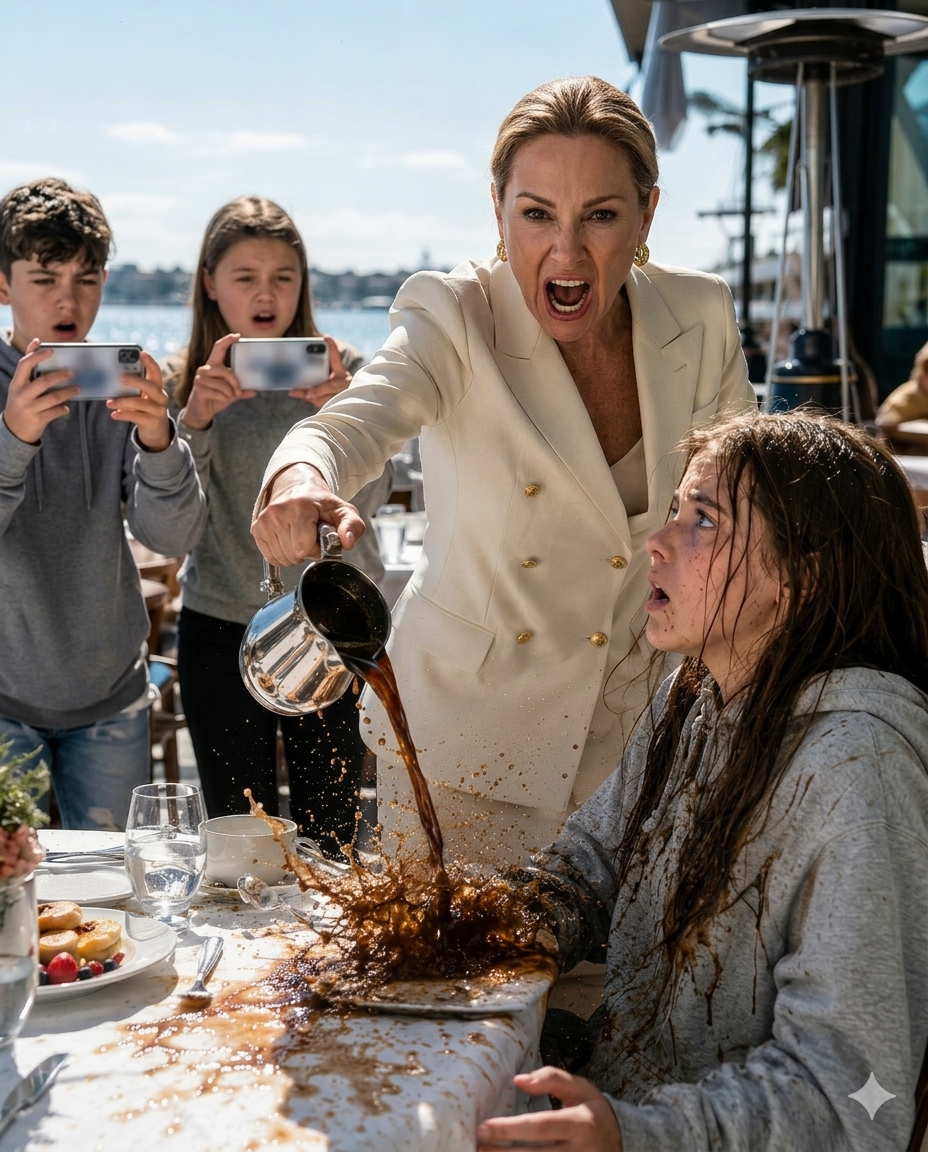
Il caffè aveva impregnato i capelli fino a trasformarli in corde scure e gocciolanti attaccate al viso. La felpa era diventata un disastro umido e macchiato, aderente alle spalle e al petto. Lungo l’attaccatura dei capelli la pelle stava già assumendo un rosso rabbioso. Dietro l’orecchio sinistro una vescica iniziava a gonfiarsi, lucida e tesa.
Sembravo una persona sopravvissuta a un incidente assurdo, non una figlia appena “punita” durante un brunch di lusso.
La voglia di urlare tornò a salire, concreta, fisica, bloccata nella gola. Voleva uscire. Voleva esplodere fuori da me più rovente del caffè stesso, un urlo capace di far tremare gli specchi e vibrare i lampadari di cristallo.
Urla. Distruggi qualcosa. Rompi tutto.
Le mie dita si serrarono sui bordi del lavabo di porcellana finché le nocche diventarono bianche.
Poi incontrai il mio stesso sguardo.
Avrei dovuto vedermi umiliata. Distrutta. Con gli occhi pieni di lacrime.
Invece erano immobili.
Freddi.
Ed è stato quello — più del bruciore, più delle risate sulla terrazza, più del rumore della caffettiera svuotata — il momento esatto in cui qualcosa dentro di me cambiò.
Fu allora che capii che il ponte tra noi non era semplicemente andato a fuoco.
Era stato cancellato dalla faccia della terra.
I imagined walking back out onto the terrace and unleashing all of it: years of being the family scapegoat, of being the “weird” one, the “difficult” one, the one who did not fit into Angela’s curated Instagram feed. I saw myself in my mind’s eye grabbing the tablecloth and yanking it, sending plates and glasses and Angela’s carefully curated image crashing to the floor. I imagined the gasp of the surrounding diners, the chorus of phones being lifted, the instant explosion of chaos. It would feel so satisfying. For about eight seconds. And then? Then it would be content. If I screamed, I gave them a show. If I cried, I gave them a story. They would slice it, edit it, caption it. Look at the crazy one. Look how unhinged she gets over nothing. Look how unstable. My family did not thrive on love or connection. They thrived on drama. They drank conflict like champagne. My mother, with her obsession with appearances, her ferocious need to look perfect even as everything underneath her was held together with credit and denial. Christopher and Amanda, with their hunger for clicks, for validation from strangers. They weren’t people, not in the way families should be. They were black holes and ring lights. Vampires of reaction. My hurt was their fuel. My anger their favorite meal. A fight meant I still cared. A fight meant I was still in the ring with them, still playing by their rules. Silence, though. Silence is a mirror. When you don’t scream back at a monster, it’s left screaming into the void, listening to the echo of its own ugliness. Eventually, if there’s nothing reflecting your cruelty back as power, all you see is yourself. I took a slow, steady breath. Then another. Then I reached for the stack of paper towels. Each dab against my neck made me hiss through my teeth—it felt like sandpaper on sunburn—but my face stayed neutral. I watched myself in the mirror as I carefully blotted away the worst of the coffee, leaving my skin uncovered. I wanted to see exactly what they had done. I wanted the image stamped into my memory with surgical clarity. The burn. The wet hair. The empty calm in my eyes. This is the price of saying no, I thought. This is what $50,000 costs in my family. I tossed the damp paper towels into the trash. The mirror, framed in brushed silver, stared back at me. A stranger and a familiar ghost. I straightened my hoodie, tugged it away from the angriest patches of skin, rolled my shoulders back, and walked out. The hallway felt longer on the way back. The hum of the air conditioning seemed louder. My boots clicked out a measured rhythm. When I stepped back out onto the terrace, the sunlight hit my face and made me squint. A breeze carried the scent of salt from the lake, the sweetness of someone’s Belgian waffle, the sharp tang of my own cooling coffee on my clothes. The table had gone quiet. The performance was over; the actors were waiting for notes. Christopher sat with his phone still in his hand, screen up. The smugness on his face had settled into something tighter, like he wasn’t sure whether this was going to go viral or just be saved for family group chat amusement. Amanda’s fingers danced over her screen, her bottom lip caught between her teeth. She was probably already workshopping captions. Angela stood with her arms crossed. Her designer coat—cream wool, the one she claimed she’d gotten “on sale” but I knew had swallowed half a mortgage payment—was perfectly spotless. Not a drop of coffee on her. She looked at me like a queen waiting for a servant to apologize for bleeding on the floor. I didn’t sit down. I stepped to my chair, reached into the pocket of my damp hoodie, and pulled out my wallet. The leather stuck slightly to the fabric; the bills inside felt faintly damp when I slid them free. I counted out four twenties. Eighty dollars. My share of the brunch I hadn’t eaten. The eggs and avocado toast I’d ordered were still sitting there, congealing on their plate, untouched. Angela’s mimosa glass was half-empty. The coffee pot, its crime committed, sat where she’d dropped it, a few leftover drops pooling in its spout like guilt. I placed the bills next to it on the white linen. Not tossed. Not crumpled. I smoothed each bill so it lay perfectly flat. For a second, the green of the money, the brown of the coffee stain, and the white of the tablecloth formed a strange little flag, a symbol of everything wrong and everything right about this moment. I could feel all three sets of their eyes on me, along with the curious weight of several strangers’ stares. No one said anything. Good. I turned away from the table. “That’s right, run away,” Christopher called after me, voice sharp with performative triumph. “Go cry in your truck, Emma.” My hand tightened around my wallet. I kept walking. I didn’t look back. Their silence followed me like a shadow. Heavy. Thick. The kind of silence you get at the end of something, not the middle. It was the sound of a door closing. Not gently. Bolted. Locked. Welded shut. They thought they had just banished me. Sent the trash to the curb. They had no idea they had just filmed their own execution.